Most B2B sites turn only 2% to 5% of traffic into leads, and replying within 5 minutes can lead to a 21x higher qualification rate than waiting 30 minutes. So if I were picking a lead gen chatbot solutions in 2026, I’d focus on four things first: lead volume, qualification depth, CRM sync, and price.
Here’s the short version: Drift, Intercom, Lindy, Tidio, Landbot, Botsonic, and Ylopo each fit a different sales motion. Drift is for account-based B2B sales. Intercom fits SaaS teams that need sales and support in one place. Lindy leans into AI-agent follow-up. Tidio is for small teams that want a fast setup. Landbot is for form replacement and guided flows. Botsonic works well for content-heavy sites. Ylopo is built for real estate teams that work leads over weeks or months through SMS and voice.
If I had to boil the article down into one checklist, it would be this:
- Drift: account matching, rep routing, meeting booking, Salesforce/HubSpot sync, starts around $2,500/month
- Intercom: Fin AI, shared inbox, in-app messaging, starts at $29/seat/month plus AI usage fees
- Lindy: AI agents, workflow follow-up, HubSpot/Salesforce/Google Calendar, paid plans from $49.99/month
- Tidio: live chat, Lyro AI, pre-chat surveys, Shopify/WooCommerce links, starts at $29/month
- Landbot: no-code branching chats, branded flows, HubSpot/Salesforce/Google Sheets, starts at $40/month
- Botsonic: trains on docs, PDFs, FAQs, and URLs, API-based CRM links, starts around $49/month
- Ylopo: SMS, AI voice, IDX and Facebook lead nurture for agents, starts around $395/month
Bottom line: I wouldn’t choose based on the longest feature list. I’d choose based on who the bot talks to, what it asks, where the lead goes next, and how well it fits the CRM my team already uses.
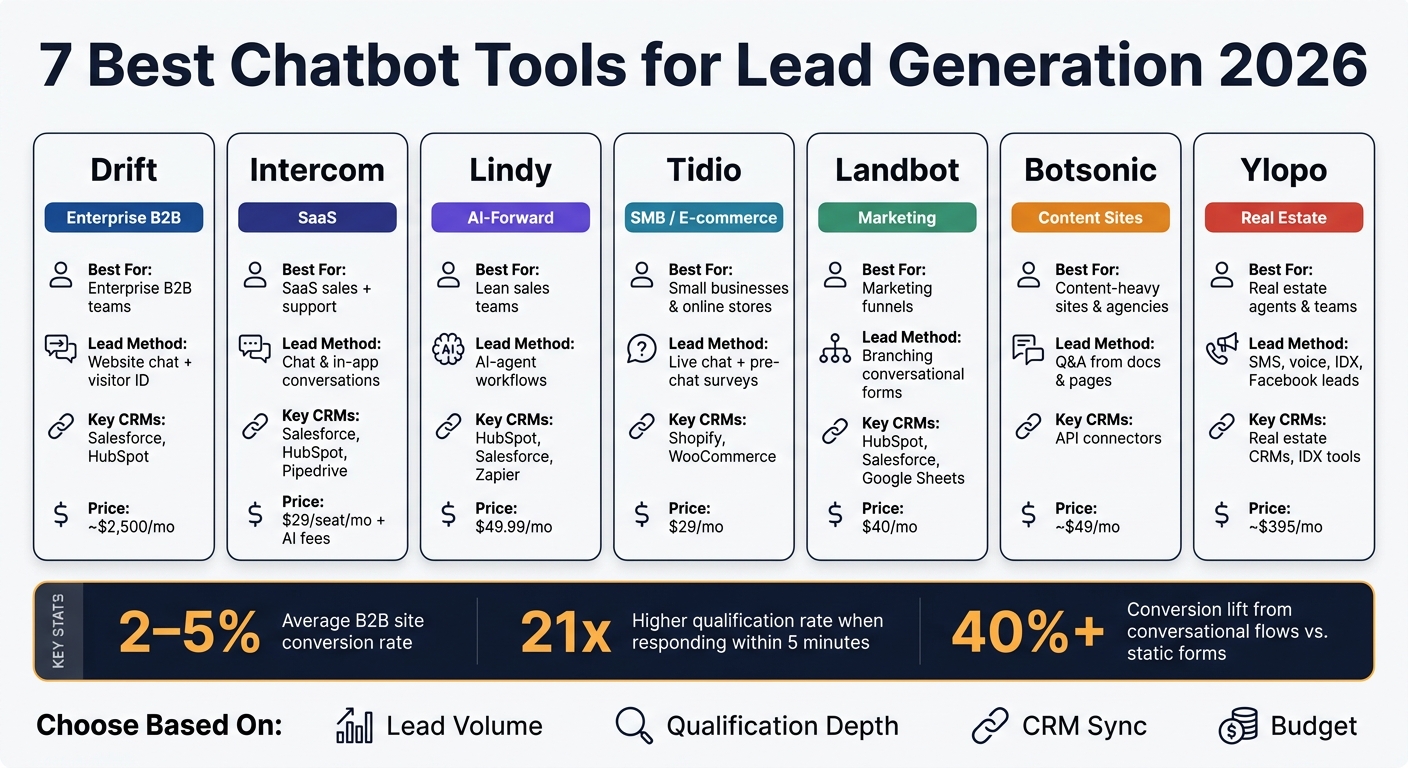
7 Best Chatbot Tools for Lead Generation 2026: Side-by-Side Comparison
The Top AI Chatbots for Lead Generation in 2026 | EP49
sbb-itb-8aac02d
Quick Comparison
| Tool | Best For | Main Lead Method | Key Integrations | Starting Price |
|---|---|---|---|---|
| Drift | Enterprise B2B teams | Website chat + anonymous visitor ID | Salesforce, HubSpot | ~$2,500/month |
| Intercom | SaaS sales + support | Chat and in-app conversations | Salesforce, HubSpot, Pipedrive | $29/seat/month + AI fees |
| Lindy | Lean sales teams | AI-agent workflows | HubSpot, Salesforce, Google Calendar, Zapier | $49.99/month |
| Tidio | SMBs and e-commerce | Live chat + pre-chat surveys | Shopify, WooCommerce | $29/month |
| Landbot | Marketing funnels | Branching conversational forms | HubSpot, Salesforce, Google Sheets | $40/month |
| Botsonic | Content-heavy sites | Q&A from site docs and pages | APIs and connectors | ~$49/month |
| Ylopo | Real estate | SMS, voice, IDX, Facebook leads | Real estate CRMs, IDX tools | ~$395/month |
The rest of the article breaks down where each tool fits, what kind of team should use it, and what trade-offs to watch before buying. These tools are a key part of a broader strategy to increase sales using AI across your entire funnel.
Best Chatbot Tools for B2B Sales and SaaS Teams
For B2B teams, the best chatbot tools do two jobs well: qualify leads fast and send them to the right owner. That’s what turns inbound interest into qualified meetings instead of a pile of half-finished chats.
Drift
Drift, part of Salesloft, is built for conversational marketing and account-based selling in B2B. One of its standout features is Drift Intel, which uses IP-to-account matching to identify anonymous website visitors by company. On top of that, AI Personas help qualify leads using firmographic data and CRM history.
Drift captures leads through conversational playbooks that ask targeted questions tied to frameworks like BANT or MEDDIC. Once a lead meets the set threshold, Drift routes the conversation to the right rep based on territory or account ownership and can book the meeting on the spot. It also syncs with Salesforce, HubSpot, and Marketo.
Premium plans start at about $2,500/month on annual contracts, and setup usually takes about a week. On G2, Drift has a 4.4/5 rating from more than 1,100 reviews. Users often point to faster pipeline movement, though some say setup can be a bit of a heavy lift. Drift makes the most sense for mid-market and enterprise B2B SaaS teams with longer, multi-touch sales cycles.
Intercom
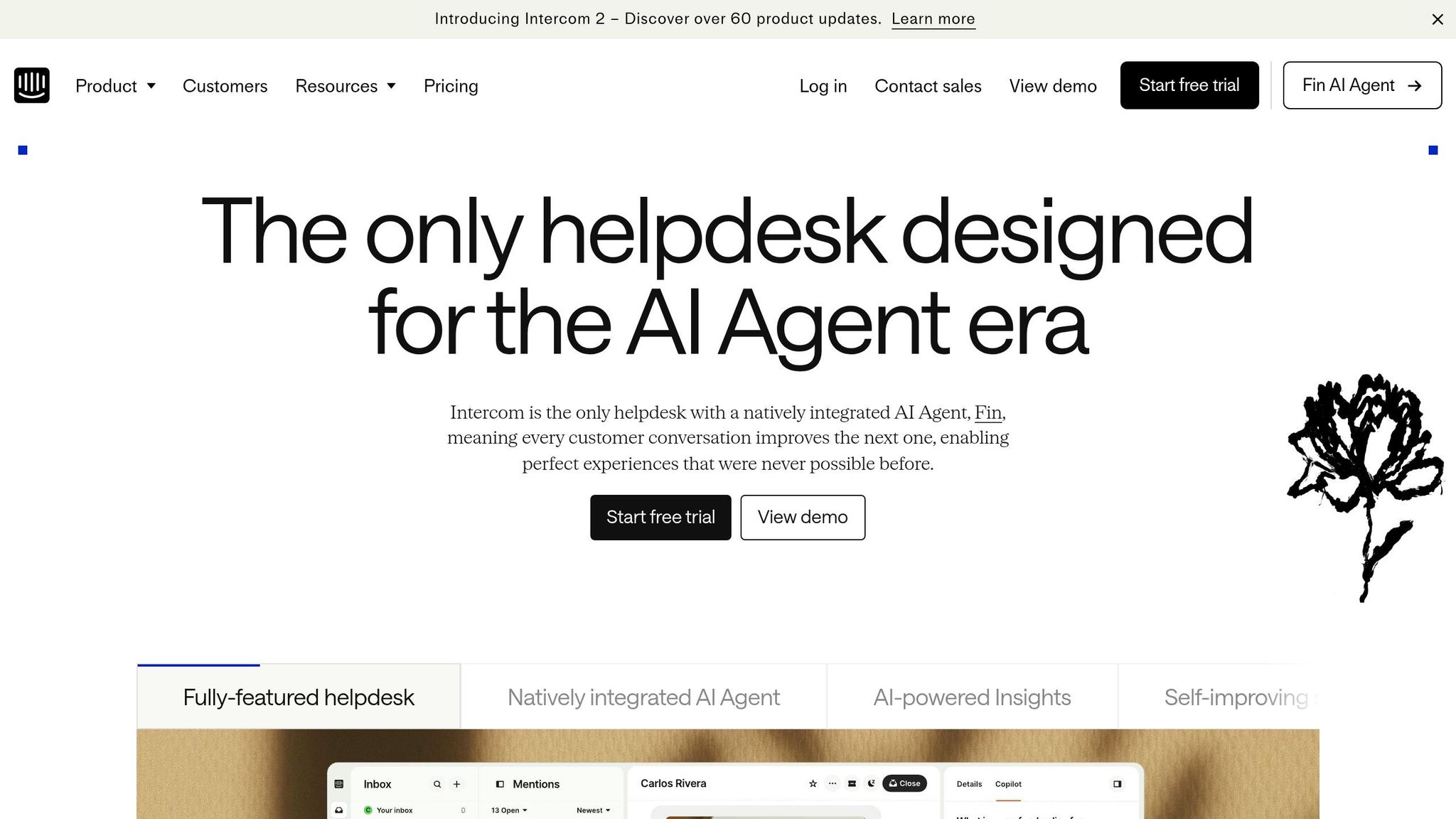
Intercom is a strong match for SaaS teams running a product-led growth model, especially if sales and support need to work from the same place. Its Fin AI agent handles both sales qualification and support questions. It also works with in-app messaging and product tours, which helps move users from marketing to sales to support without dropping context.
Lead capture happens through Fin AI agent workflows and custom bots that run multi-step qualification flows. When a lead is ready, Intercom can pass the conversation to a live rep without making the customer start over. It connects to Salesforce, HubSpot, and Pipedrive.
Pricing ranges from $29/seat/month for Essential to $132/seat/month for Expert, plus a $0.99 usage fee per Fin AI resolution. Intercom has a 4.5/5 rating on G2 from more than 3,000 reviews. It’s a good pick for SaaS teams that want one platform for both pre-purchase conversations and post-sale support.
For teams that want automation to keep going after that first reply, Lindy takes a different path.
Lindy
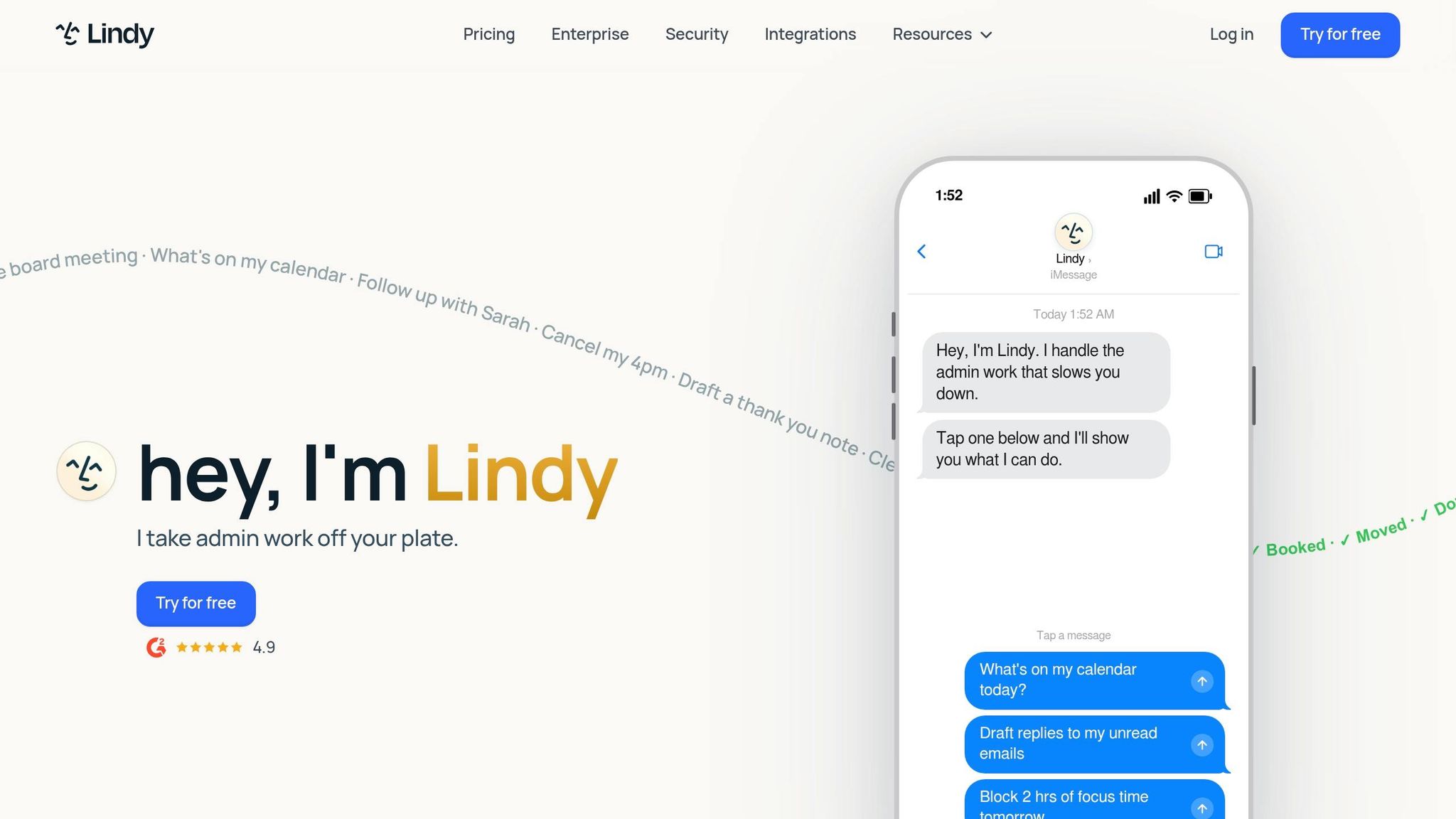
Lindy uses AI agents that keep working after lead capture, which makes it a fit for teams that need more follow-through after the first website conversation. On the front end, Lindy deploys AI agents that engage visitors, ask qualification questions, and collect contact details without needing a human in the loop.
Qualification and routing run through configurable agent workflows. These workflows can score leads, send follow-up messages, and escalate to a rep once a set threshold is met. Lindy connects with HubSpot, Salesforce, and Google Calendar for meeting booking, and it also supports Zapier for broader CRM and tool connections.
Pricing starts at $0 for a limited free tier, with paid plans beginning at $49.99/month. Lindy fits lean sales teams and SaaS operators that want agent-based automation to handle qualification and follow-up without adding headcount.
Across these three tools, you can see three different sales motions take shape:
- Drift for enterprise account-based selling
- Intercom for product-led growth
- Lindy for agent-based follow-through
Best Chatbot Tools for SMBs, Marketing Teams, and Content Funnels
The B2B tools above lean toward routing and qualification. These three take a different path: fast setup, simple workflows, and content-first lead funnels.
Tidio
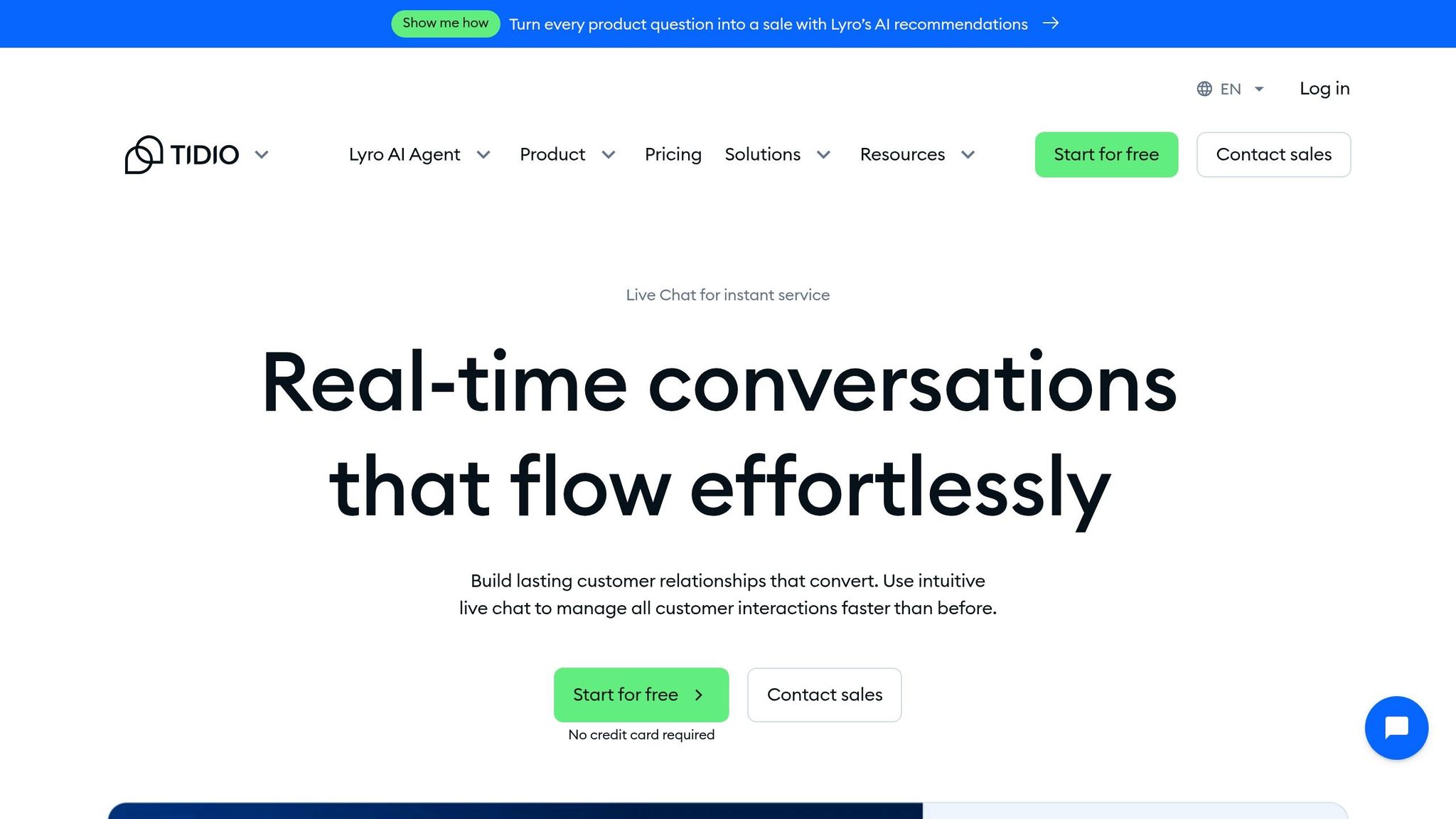
Tidio is built for teams that want to get moving fast. In many cases, teams can launch in about 20 minutes. That matters when you don't have weeks to spend on setup.
Inside one interface, Tidio brings together live chat, rule-based automation, and Lyro, its AI agent. Lyro can handle common questions, while pre-chat surveys help capture leads before a conversation even starts. If you run an online store, Tidio gets extra points for its native integrations with Shopify and WooCommerce.
Paid plans start at $29/month, and AI add-ons cost extra. For small businesses and online stores, it's a simple, practical option for lead capture without a heavy lift.
For teams that want tighter control over how the conversation unfolds, Landbot gives you more room to shape the journey.
Landbot
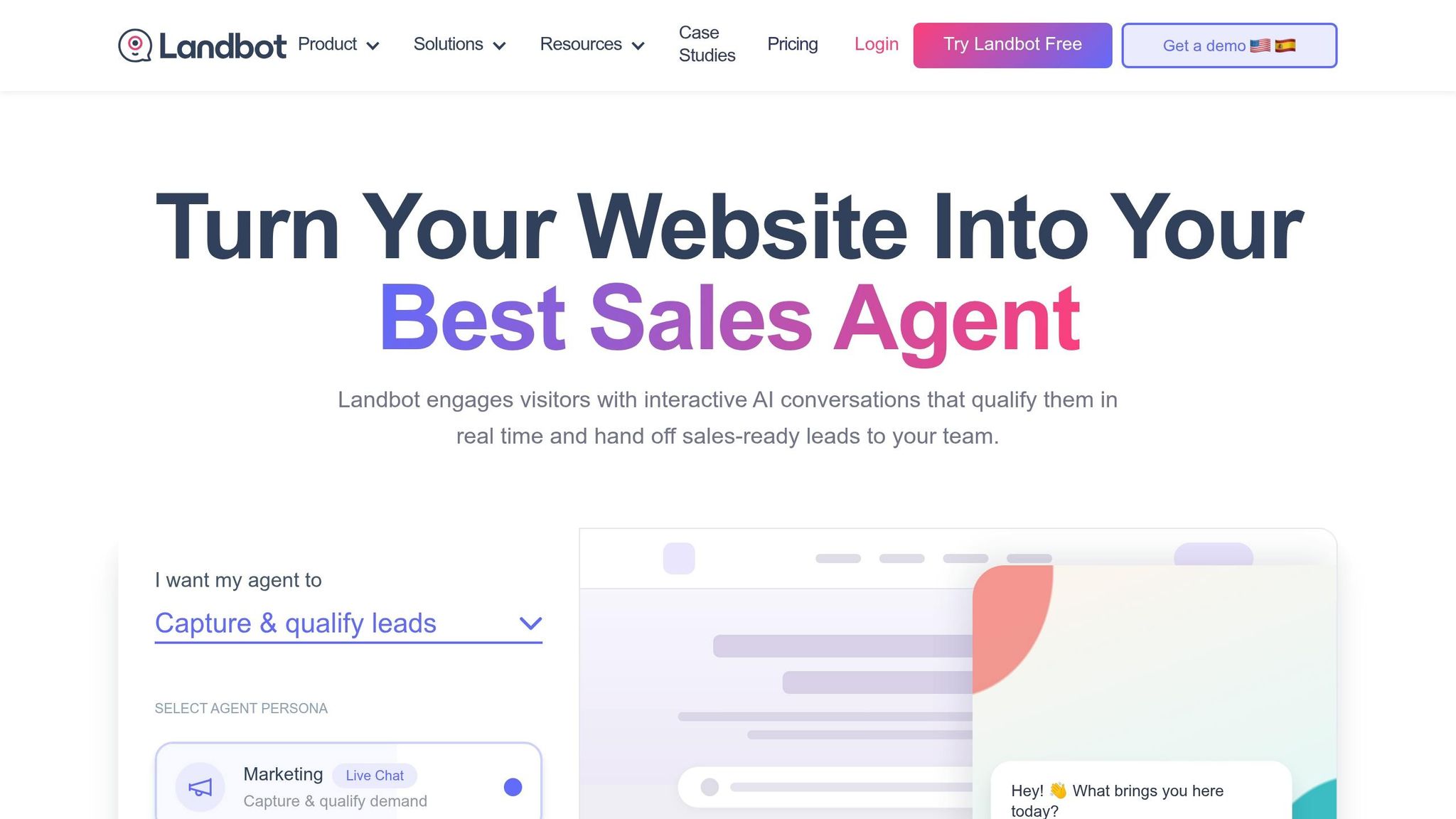
Landbot turns landing pages into conversations. Instead of sending visitors to a plain form, you can use its drag-and-drop builder to create branching flows without code. That makes it easier to guide people step by step, almost like a guided intake instead of a form dump.
One marketing agency reported 40%+ conversion rates after replacing forms with Landbot. That's the kind of result that gets attention. Landbot also connects natively with HubSpot, Salesforce, and Google Sheets, so leads don't get stuck in limbo.
Pricing starts at $40/month and scales by chat volume. It's the best fit for marketers who want full control over branded, interactive lead funnels, including WhatsApp campaigns.
If your site already has a lot of useful content, Botsonic takes a different angle.
Botsonic
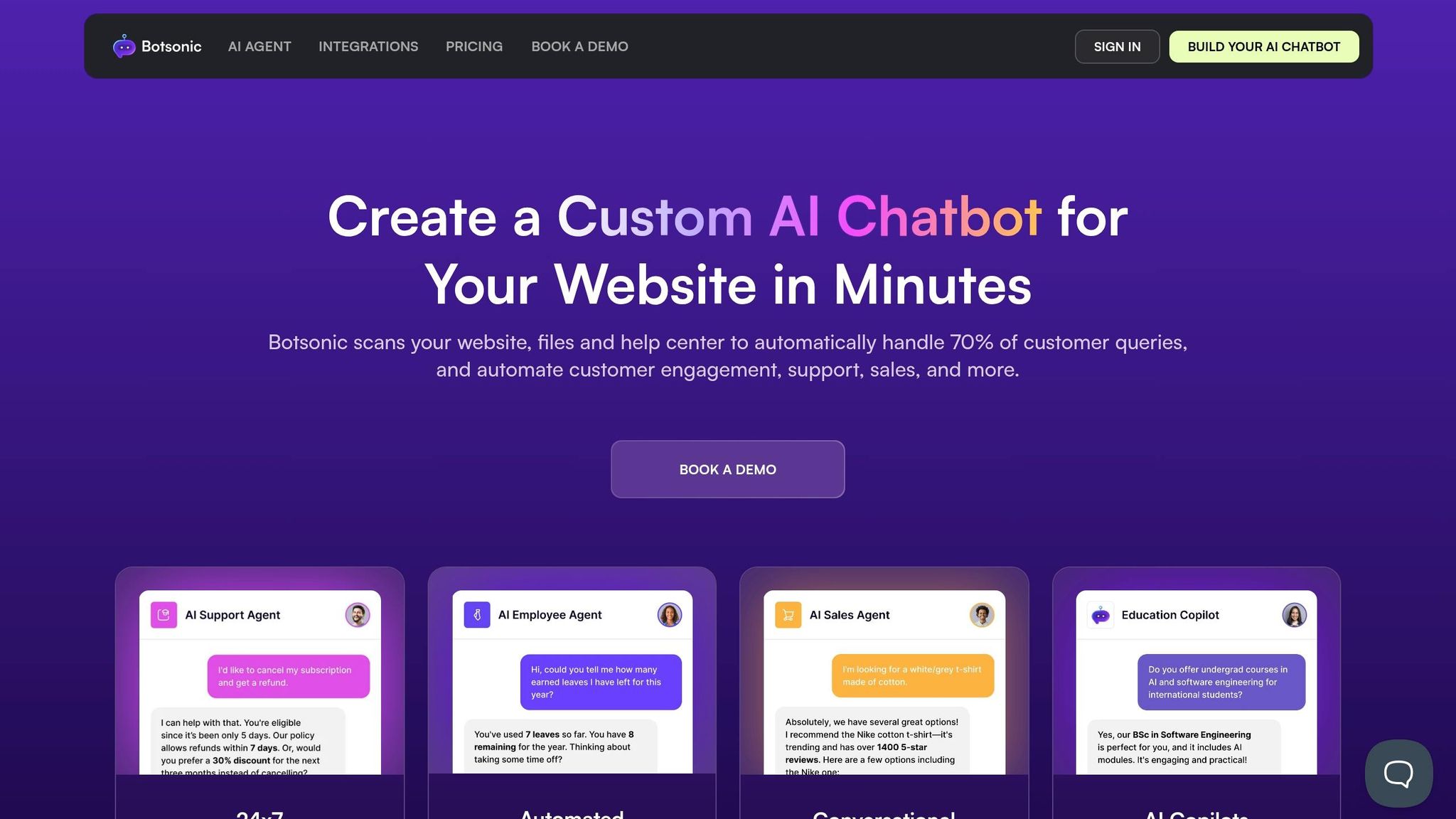
Botsonic uses the content you already have as the base for lead capture. It can train on FAQs, PDFs, help docs, product pages, and URLs. So instead of building every answer from scratch, you let your site content do more of the work.
It can answer visitor questions, qualify interest, and collect contact details on content-heavy sites. It also connects to CRMs through APIs and standard connectors. Pricing is usage-based and scales with message volume.
Botsonic makes the most sense for agencies, SaaS brands, and content-heavy sites. If your content library is already strong, this tool helps turn it into a working lead-capture layer.
Industry-Specific Option and Side-by-Side Comparison
The six general-purpose tools above are built for broad use cases. That matters because streamlining sales processes doesn’t look the same in every business. Some teams work in fast, web-first funnels. Others depend on slow-burn follow-up across SMS, voice, and niche CRMs.
When the sales cycle, channel mix, and CRM stack are tightly tied to one field, industry fit often becomes the main factor. That’s where Ylopo stands apart: it’s built just for real estate.
Ylopo AI Chatbot
Real estate lead nurturing moves at a much slower pace than most SaaS or e-commerce funnels. Buyers often take 30 to 180 days to move from lead to client, and sellers can take 6 to 18 months. That kind of timeline calls for a different follow-up system, one centered on SMS and voice instead of only on-site chat.
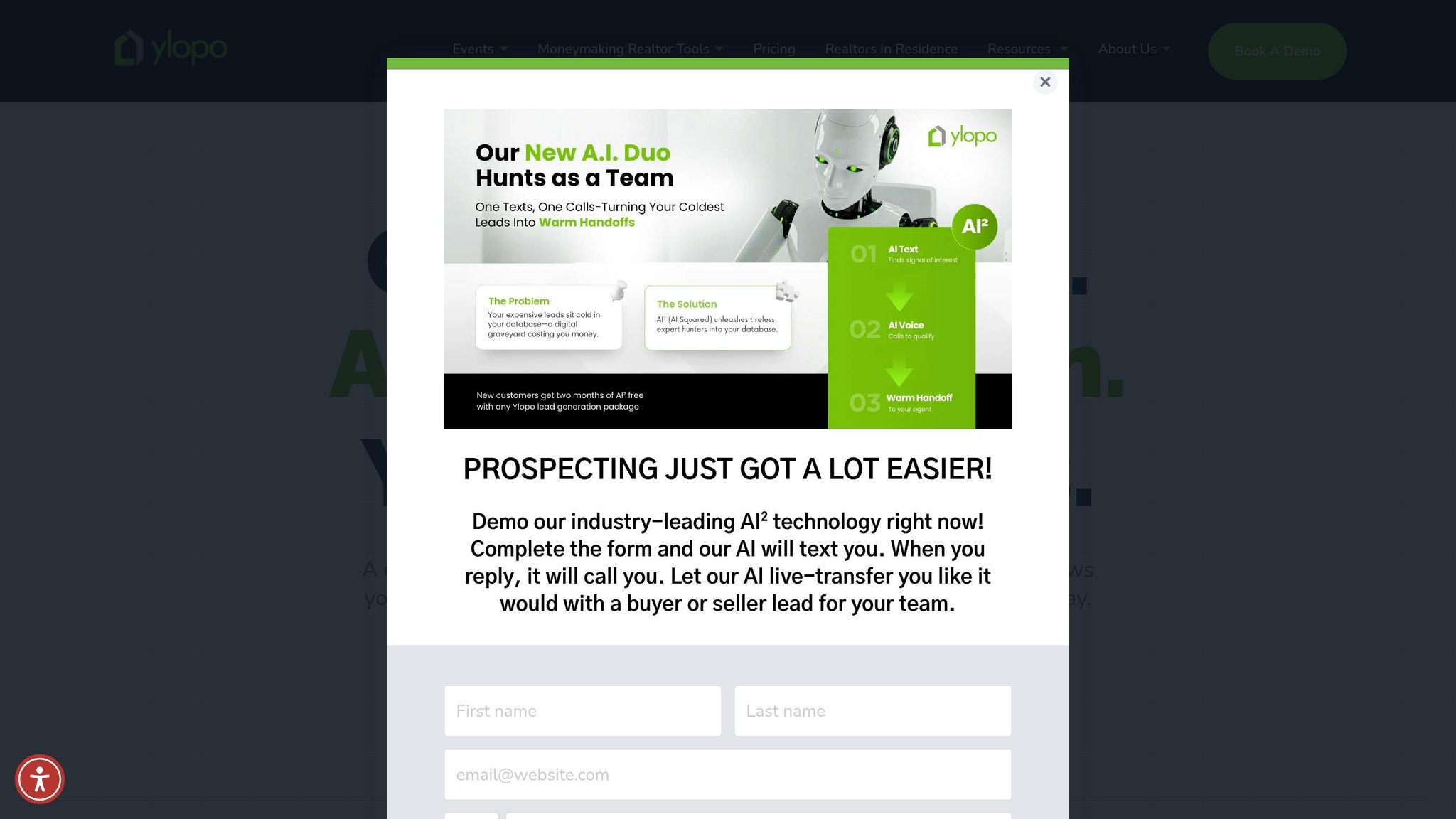
Ylopo’s AI assistant, rAIya, handles lead engagement through SMS and AI voice calls, bringing cold leads back into the conversation from Facebook ads and IDX sites. If a prospect clicks on a listing, it can ask property-level questions like budget, location, and financing status. That helps teams qualify leads before an agent ever has to make the first call.
For agents running paid campaigns and dealing with 200+ leads per week, that kind of automated, long-cycle nurture isn’t a nice extra. It’s part of keeping up.
The table below shows how the seven tools differ by use case, integrations, and starting price.
Comparison Table: Features, CRM Links, Pricing, and Best-Fit Teams
| Tool | Core Features | Lead Capture Method | CRM / Integrations | Starting Price (USD) | Best Fit |
|---|---|---|---|---|---|
| Drift | IP-to-account matching, ABM routing | Anonymous visitor identification | Salesforce, HubSpot | Starts at ~$2,500/mo | Enterprise B2B sales teams |
| Intercom | Fin AI agent, shared inbox, product tours | Chat-based engagement | Salesforce, HubSpot | Starts at $29/seat/mo; usage-based AI fees | SaaS support and sales teams |
| Lindy | Autonomous AI agents, multi-tool task sync | Workflow automation | Connected apps and workflow tools | Free tier; paid plans start at $49.99/mo | RevOps and AI-forward sales teams |
| Tidio | Lyro AI, live chat, pre-chat surveys | Website chat and pre-chat surveys | E-commerce and support integrations | Free plan available; paid plans start at ~$29/mo | SMBs and online stores |
| Landbot | No-code flow builder, branching conversations | Flow-based conversations | CRM and messaging connectors | Starts at $40/mo | Marketing teams and content funnels |
| Botsonic | Custom AI trained on docs/URLs, API connectors | Website chat and content-based Q&A | API connectors | Starts around $49/mo | Agencies and content-heavy SaaS sites |
| Ylopo | SMS/voice nurture, IDX integration, rAIya | IDX sites, Facebook ads, SMS | Real estate-specific CRMs and IDX platforms | Starts at ~$395/mo; higher with ad management included | Real estate agents, teams, brokerages |
How to Choose the Right Chatbot Tool
The right tool comes down to four things: lead volume, sales complexity, CRM fit, and budget. Use those filters first, and your shortlist gets a lot smaller, fast.
What to Compare Before Buying
Start with the factor most likely to derail the rollout: CRM fit.
If Salesforce is your main CRM, put bi-directional sync at the top of the list. If your team works inside HubSpot all day, look for a native integration. That one choice often marks the line between a setup that works and one that turns into a pile of manual fixes.
Then line up qualification depth with your sales motion. A team doing account-based selling needs something very different from a team focused on PLG, basic website lead capture, or a marketing funnel. ABM teams usually need account identification and rep routing. Smaller teams often do better with simple, automated qualification that runs without much upkeep.
There’s also a smart way to handle the first interaction. Ask 2–3 qualifying questions before asking for contact details. That approach converts around 40% better than leading with a form.
Budget is the other hard limit. Pricing runs from free to over $3,500/month. Don’t look at the subscription price by itself. Look at cost per qualified lead. A cheaper tool that sends junk to sales can cost more in the long run.
After that, be honest about setup and upkeep. How much can your team support in practice?
Enterprise tools like Drift often need a dedicated ops owner to manage playbooks and routing rules. Lighter tools like Tidio or Botsonic are usually faster to get live.
Key Points to Carry Forward
Once you’ve narrowed the shortlist, the last call is about fit, not the longest feature list.
Drift and Intercom make sense for complex B2B pipelines. Lindy fits custom routing. Tidio, Botsonic, and Landbot are a better match when speed or control matters most.
And the chatbot itself is just the front door. Integrations, CRM sync quality, and follow-up workflows are what decide whether a captured lead turns into a closed deal.
FAQs
How do I choose the right chatbot for my sales process?
Choose a chatbot that matches your sales funnel, your team’s technical skill, and your CRM setup. Put native CRM integration at the top of the list so lead data, chat transcripts, and intent scores sync on their own.
It also helps to decide what kind of bot you need. Do you want simple rule-based flows, or do you need more advanced AI? Then look at the channels you use and check whether the tool can handle lead scoring, meeting scheduling, and fast handoff to live agents when a prospect shows high intent.
What integrations matter most before buying?
Before you buy a lead generation chatbot, check that it works with the tools you already use. If it doesn’t, you can end up stuck with manual data entry, messy handoffs, and slow workflows.
Start with integrations for your CRM, whether that’s HubSpot, Salesforce, or Pipedrive. Then look at your calendar so the bot can book meetings on its own, and tools like Slack so your sales team gets alerts right away.
One more thing: native integrations are often easier to set up and more reliable than Zapier-based connections.
How many qualifying questions should a chatbot ask?
A chatbot should usually ask 2 to 3 targeted questions to qualify prospects without slowing them down.
Keep the focus on a few key points:
- company size
- use case
- budget
- timeline
With conditional logic, the bot can send qualified leads to a human or straight to a booking calendar. It can also screen out poor-fit leads before they take up sales time.