Sales forecasting helps businesses estimate future revenue by analyzing historical performance, current sales opportunities, and market trends. While no forecast is perfectly accurate, a structured forecasting process allows businesses to make better decisions about hiring, budgeting, inventory, and growth.
Many small businesses rely on intuition when predicting future sales. As companies grow, however, relying on assumptions becomes increasingly risky. A documented forecasting process helps sales teams identify trends, allocate resources more effectively, and respond proactively to changing market conditions.
In this guide, you'll learn what sales forecasting is, why it matters, the most common forecasting methods, common mistakes to avoid, and practical ways to improve forecasting accuracy.
Quick Takeaways
• Sales forecasting estimates future revenue using sales data, trends, and market conditions.
• Accurate forecasts support better budgeting, staffing, and business planning.
• Businesses use different forecasting methods depending on their sales cycle and available data.
• Reviewing forecasts regularly improves accuracy and helps identify changing sales trends.
• Forecasting works best when supported by consistent sales processes and reliable performance data.
What Is Sales Forecasting?
Sales forecasting is the process of estimating future sales revenue over a specific period, such as the next month, quarter, or year. Businesses use forecasts to plan resources, set realistic sales targets, manage cash flow, and measure overall business performance.
A forecast combines information from several sources, including historical sales performance, active opportunities, current market conditions, seasonal demand, and sales team insights.
Businesses often use sales forecasts to answer questions such as:
• How much revenue is expected next quarter?
• Will current sales support hiring additional employees?
• Are inventory levels sufficient to meet demand?
• Which products or services are expected to perform best?
Why Sales Forecasting Matters
Whether you're a small business or a growing organization, accurate forecasts provide valuable information that supports nearly every business function.
Better Business Planning
Sales forecasts help business owners make informed decisions about hiring, budgeting, inventory, marketing, and expansion.
Improved Cash Flow Management
Understanding expected revenue helps businesses anticipate expenses, manage working capital, and avoid unexpected cash shortages.
More Realistic Sales Targets
Forecasts allow managers to set achievable goals based on data rather than assumptions.
Better Resource Allocation
Knowing which products, services, or customer segments are expected to grow helps businesses invest resources where they'll have the greatest impact.
The U.S. Small Business Administration encourages businesses to use financial planning and forecasting as part of sound business management because better planning supports long-term growth and resilience ().
Common Sales Forecasting Methods
Different businesses use different forecasting methods depending on their size, available data, and sales process.
Common Sales Forecasting Methods
Businesses use different sales forecasting methods depending on their sales cycle, available data, and forecasting objectives. Many organizations combine several methods to improve accuracy rather than relying on a single approach.
1. Historical Forecasting
Historical forecasting estimates future sales using previous revenue data. It works best for businesses with stable demand, consistent sales patterns, and limited changes in market conditions.
2. Opportunity Stage Forecasting
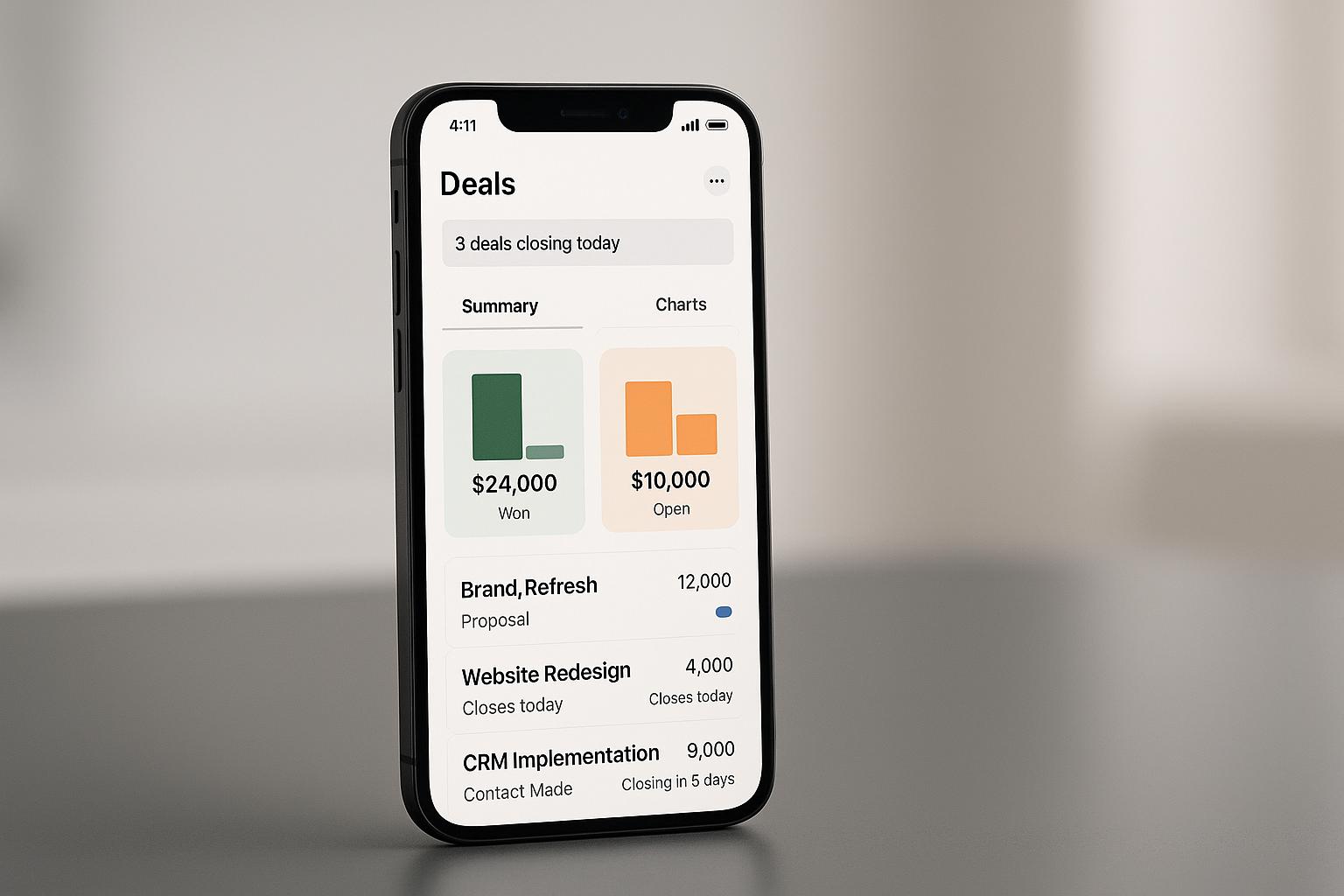
This method estimates future revenue by assigning a probability to each sales opportunity based on its current stage in the sales process. Businesses using structured deal tracking software can monitor opportunities more consistently and improve forecasting accuracy because sales activities are updated throughout the pipeline.
3. Length of Sales Cycle Forecasting
Length of sales cycle forecasting predicts future revenue based on how long opportunities typically take to progress from initial contact to closing. This approach is particularly useful for businesses with longer or more complex buying cycles.
4. Pipeline Forecasting
Pipeline forecasting combines deal value with closing probability to estimate expected revenue from active sales opportunities. It provides a realistic view of future revenue by considering both the size of each opportunity and its likelihood of closing.
Sales Forecast Example
Imagine a business has the following opportunities scheduled to close this quarter.
| Opportunity | Deal Value | Probability | Forecasted Revenue |
|---|---|---|---|
| Company A | $15,000 | 90% | $13,500 |
| Company B | $8,000 | 70% | $5,600 |
| Company C | $20,000 | 40% | $8,000 |
Instead of assuming every opportunity will close, probability-based forecasting produces a more realistic revenue estimate.
As businesses grow, combining forecasting with a structured sales pipeline provides better visibility into expected revenue, making it easier to identify stalled opportunities, prioritize high-value deals, and improve forecasting accuracy.
How the Sales Forecasting Process Works
Creating a sales forecast is more than estimating future revenue. It involves gathering reliable data, selecting an appropriate forecasting method, and regularly reviewing projections as business conditions change. While every organization has its own approach, most sales forecasts follow a similar process.
Step 1. Collect Historical Sales Data
Start by reviewing previous sales performance, including monthly or quarterly revenue, seasonal trends, and product or service performance. Historical data provides a baseline that helps identify recurring patterns and establish realistic expectations.
Step 2. Review Your Sales Pipeline
Evaluate active sales opportunities, deal values, sales stages, and the likelihood of closing each opportunity.
Step 3. Choose a Forecasting Method
Select the forecasting method that best fits your business. Depending on your sales cycle and available data, you may use historical forecasting, opportunity stage forecasting, sales cycle forecasting, or pipeline forecasting.
Step 4. Estimate Future Revenue
Apply your chosen forecasting method to calculate projected revenue for the next month, quarter, or year. Using realistic close probabilities and current sales data generally produces more accurate forecasts than relying on assumptions alone.
Step 5. Compare Forecasts with Actual Results
After the forecasting period ends, compare projected revenue with actual sales performance. Measuring forecast accuracy helps identify trends, improve future projections, and refine your forecasting process.
Step 6. Update Your Forecast Regularly
Sales forecasts should be updated whenever significant opportunities change, new deals are added, or market conditions shift. Reviewing forecasts regularly allows businesses to make timely decisions and respond more effectively to changing customer demand.
Following a consistent forecasting process helps businesses improve planning, allocate resources more effectively, and make more confident decisions as new sales data becomes available.
Common Sales Forecasting Mistakes
Even businesses with access to reliable data can produce inaccurate forecasts if their forecasting process lacks consistency. Recognizing these common mistakes helps improve forecast accuracy and supports better business planning.
Relying Too Heavily on Historical Data
Past sales performance provides valuable context, but it shouldn't be the only basis for forecasting. Changes in customer demand, market conditions, and industry trends can quickly make historical data less reliable.
Assigning Unrealistic Close Probabilities
Forecasts become overly optimistic when every opportunity is treated as likely to close. Using realistic probability estimates based on sales stage and historical conversion rates produces more dependable revenue projections.
Keeping Inactive Opportunities in the Pipeline
Outdated or stalled deals can inflate revenue forecasts and create a misleading picture of future sales. Regularly reviewing and cleaning your pipeline helps maintain forecast accuracy.
Failing to Update Forecasts Regularly
Sales forecasts should evolve as opportunities progress and market conditions change. Waiting until the end of the quarter to update projections often leads to poor business decisions.
Measuring Forecasts Without Reviewing Results
Forecasting improves over time when businesses compare projected revenue with actual sales. Reviewing forecast accuracy helps identify recurring issues and refine future forecasting methods.
Avoiding these mistakes won't eliminate uncertainty, but it will help businesses produce more reliable forecasts, allocate resources more effectively, and make better strategic decisions.
Best Practices for Improving Sales Forecasts
Accurate forecasting is an ongoing process rather than a one-time exercise. Businesses that consistently review performance and refine their forecasting methods are better positioned to adapt to changing market conditions.
Consider these best practices:
• Standardize your sales process.
• Keep customer and opportunity data up to date.
• Review forecasts regularly.
• Monitor conversion rates between sales stages.
• Track historical forecasting accuracy.
• Adjust forecasts when market conditions change.
As businesses mature, combining sales forecasting with a well-defined sales process helps ensure opportunities are evaluated consistently and revenue projections are based on measurable data rather than assumptions.
Sales Forecasting vs. Sales Planning
Although closely related, sales forecasting and sales planning serve different purposes.
Forecasting answers "What is likely to happen?" while planning answers "What should we do next?"
Using both together allows businesses to make better operational and strategic decisions.
Frequently Asked Questions
What is sales forecasting?
Sales forecasting is the process of estimating future revenue using historical sales data, active opportunities, and current market conditions.
Why is sales forecasting important?
Forecasting helps businesses make informed decisions about budgeting, hiring, inventory, resource allocation, and growth planning.
Which sales forecasting method is most accurate?
There is no single best method. Many businesses combine historical performance, opportunity stage forecasting, pipeline analysis, and market trends to improve accuracy.
How often should sales forecasts be updated?
Most businesses review forecasts monthly, while organizations with active sales pipelines often update forecasts weekly.
What causes inaccurate sales forecasts?
Poor data quality, inconsistent sales processes, outdated opportunities, unrealistic close rates, and changing market conditions are among the most common causes.
Can small businesses benefit from sales forecasting?
Absolutely. Even simple forecasting methods help small businesses improve budgeting, cash flow management, and long-term planning.
Final Thoughts
Sales forecasting is more than predicting future revenue—it's a strategic tool that helps businesses make smarter decisions with greater confidence. While no forecast will ever be perfect, using consistent methods, maintaining accurate sales data, and reviewing forecasts regularly can significantly improve reliability.
The most successful businesses don't treat forecasting as a quarterly exercise. Instead, they use it as an ongoing process that supports better planning, stronger financial management, and continuous improvement. When forecasting is combined with a structured sales process and reliable opportunity management, businesses are better equipped to adapt to changing market conditions and achieve sustainable growth.
Businesses that maintain clean sales data and monitor active opportunities also tend to produce more reliable forecasts because decisions are based on current information rather than assumptions. Strong deal tracking practices support this process by keeping opportunity data accurate and up to date throughout the sales cycle.